THE VIETNAM WAR
THE DEFINITIVE ILLUSTRATED HISTORY
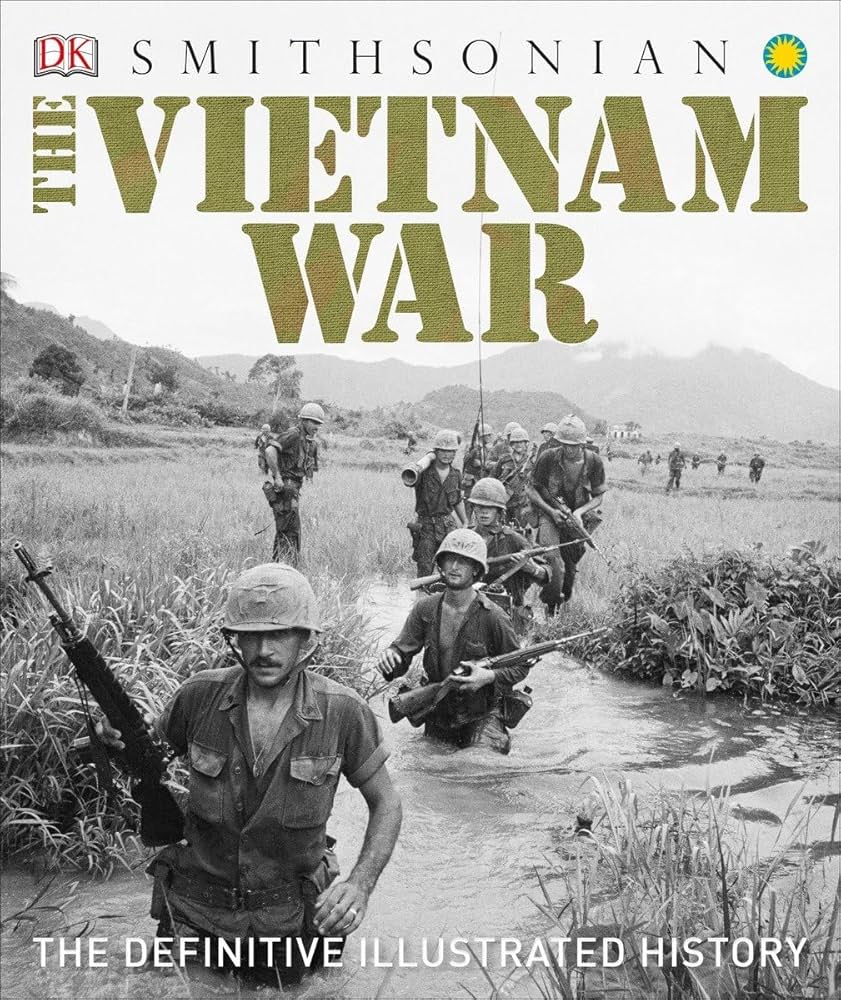
The definitive telling of one of the longest and most controversial wars in US history.
Delve into the compelling history and impact of the Vietnam War in reverting detail. This authoritative visual guide unpacks accounts of struggle, sacrifice, and bravery, making this a perfect read for any military history enthusiast.
Inside the pages of this retelling of America’s bloodiest conflict, you’ll discover:
– A vivid, moving, and informative read written in an engaging style.
– A clear and compelling account of the conflict, in short, self-contained events from the Battle of Ia Drang to the Tet Offensive and The Khmer Rouge.
– Biography pages highlight major military and political figures such as Henry Kissinger, President Nixon, General Thieu, and Ho Chi Minh.
– Features on everyday life in the war offering additional context.
– Stunning image double page features display weapons, spy gear, and other equipment that defined the war.
– Maps and feature boxes provide additional information on significant events during the conflict.
Created in association with the Smithsonian Institution, this history book for adults is an authoritative history of both the first televised war and its lasting impact through the lenses of both sides of the conflict. The Vietnam War explores all aspects of the conflict and the wider political landscape using compelling text, maps, and archive photography of collections of weapons, aircraft, and armored vehicles.
The military techniques and conduct employed against the inferior technologies of the Viet Cong remain controversial and intriguing to date. Eyewitness accounts and iconic photographs bring events to life – from the background of the conflict to the incidents that drew America into Vietnam, the chronological event
DOWNLOAD
A RUMOR OF WAR
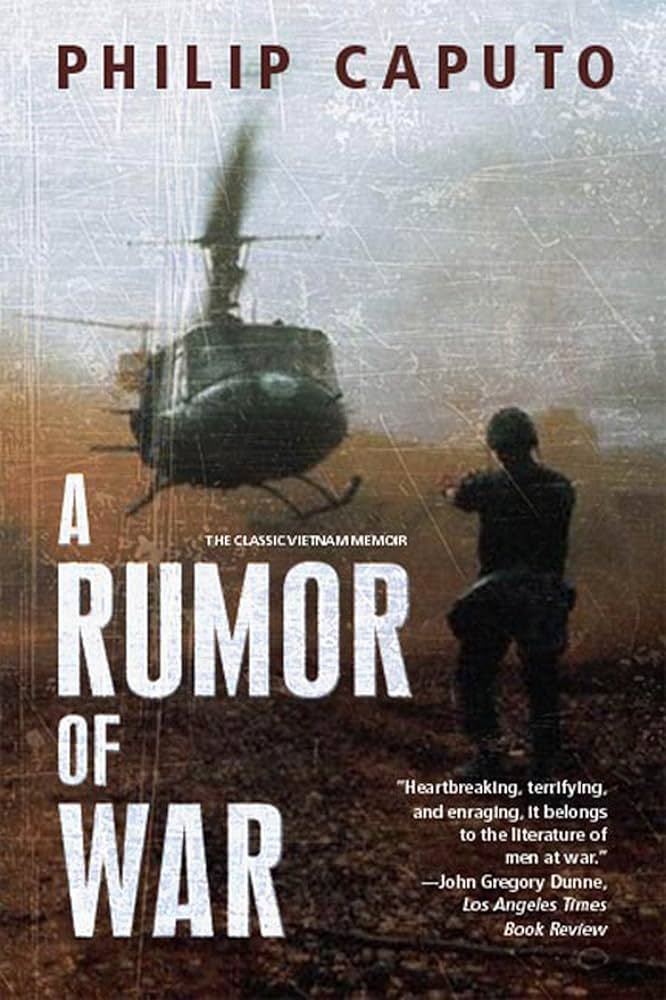
In the foreword, Caputo makes clear that this is not a history book, nor is it a historical accusation; it is a story about war, based on his experience.
The first section “The Splendid Little War”, describes Lieutenant Philip Caputo’s reasons for joining the United States Marine Corps (USMC), the training that followed and his arrival in Vietnam. Lt. Caputo was a member of the 9th Expeditionary Brigade of the USMC, the first American regular troops unit sent to take part in the Vietnam War. He arrived on March 8, 1965, and his early experiences reminded him of the colonial wars portrayed by Rudyard Kipling. The 9th Expeditionary Brigade was deployed to Da Nang (formerly Tourane) on a “merely defensive” condition, primarily to set a perimeter around an airstrip that ensured arrival and departure of military goods and personnel. The first skirmishes against the North Vietnamese Army and the Viet Cong made it clear to Lt. Caputo and his comrades that their earlier impression about Vietnam war as small and unimportant were all wrong.[2]
In the second part of the book, “The Officer in Charge of the Dead”, Lt. Caputo is reassigned from his rifle company to a desk job documenting casualties. His new position in the Joint Staff of the brigade was a change that did not suit him, because he was proud of his rifle company duties and had a certain desire to return to basic infantry command. This distance from the Main Line of Resistance gave Lt. Caputo a different perspective of the conflict. Lt. Caputo described senior officers as being more worried about trivial matters than strategy, movies being played in the open at night, risking potentially devastating mortar attacks. Lt. Caputo also witnessed enemy corpses being treasured as hunting trophies and shown off to generals; he also describes American corpses carrying evidence of Viet Cong torture.
In the final part, “In Death’s Grey Land”, Lt. Caputo is reassigned to a rifle company. He describes the North Vietnamese Army and the Viet Cong as fierce and skilled fighters, earning the grudging respect of American soldiers. Lt. Caputo describes his fellow Marines as having stopped wishing for epic, World War II-style battles; they had learned to detect boobytraps, to counter-snipe and to comb the jungle in search of enemy bunkers and their rations. Lt. Caputo took part in these operations, until troops under his command miscarried orders and shot two suspects deliberately. Lt. Caputo assumed full responsibility for the incident and faced a general court-martial; he was relieved of his command and the charges were dropped.[3] Lt. Caputo was then reassigned to a training camp in North Carolina and eventually received an honorable discharge from the service.
In the Epilogue, almost ten years after the end of his tour of duty, Philip Caputo returned to Vietnam as a war journalist for a newspaper. Old memories of his war experiences and his comrades flood his mind as he witnesses the fall of Saigon to the troops of North Vietnam. Caputo left Vietnam on April 29, 1975. A postscript published in 1996 details some of the anxieties Caputo experienced while writing the memoir and the difficulties he had handling his fame and notoriety after its publication.
DOWNLOAD
THE VIETNAM WAR
A CONCISE INTERNATIONAL HISTORY
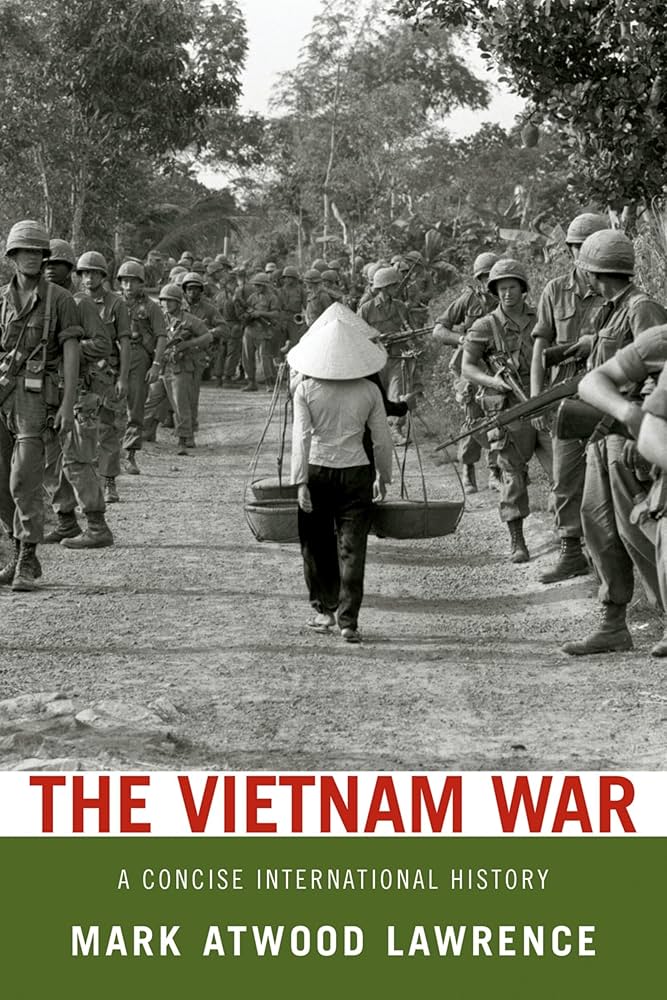
The Vietnam War remains a topic of extraordinary interest, not least because of striking parallels between that conflict and more recent fighting in the Middle East. In The Vietnam War, Mark Atwood Lawrence draws upon the latest research in archives around the world to offer readers a superb account of a key moment in U.S. as well as global history.
While focusing on American involvement between 1965 and 1975, Lawrence offers an unprecedentedly complete picture of all sides of the war, notably by examining the motives that drove the Vietnamese communists and their foreign allies. Moreover, the book carefully considers both the long- and short-term origins of the war. Lawrence examines the rise of Vietnamese communism in the early twentieth century and reveals how Cold War anxieties of the 1940s and 1950s set the United States on the road to intervention. Of course, the heart of the book covers the “American war,” ranging from the overthrow of South Vietnamese President Ngo Dinh Diem to the impact of the Tet Offensive on American public opinion, Lyndon Johnson’s withdrawal from the 1968 presidential race, Richard Nixon’s expansion of the war into Cambodia and Laos, and the problematic peace agreement of 1973, which ended American military involvement. Finally, the book explores the complex aftermath of the war–its enduring legacy in American books, film, and political debate, as well as Vietnam’s struggles with severe social and economic problems.
A compact and authoritative primer on an intensely relevant topic, this well-researched and engaging volume offers an invaluable overview of the Vietnam War.
DOWNLOAD
THE FROZEN CHOSEN
THE 1st MARINE DIVISION AND THE BATTLE OF THE CHOSIN RESERVOIR
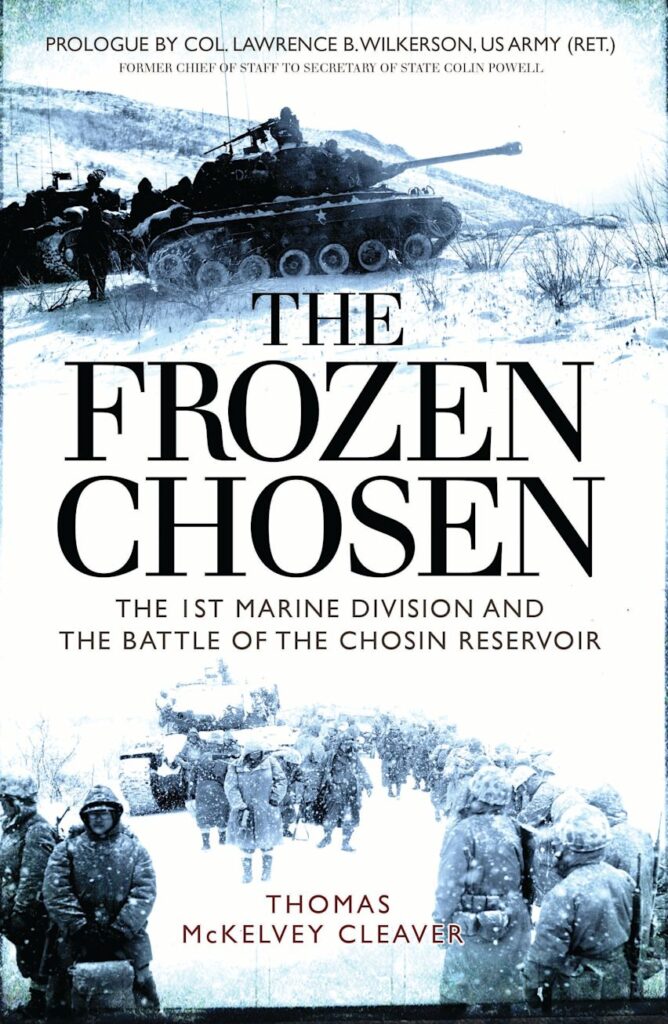
The Frozen Chosen is an account of the breakout from the Chosin Reservoir in North Korea by the First Marine Division from November to December 1950, following the intervention of Red China in the Korean War. Fought during the worst blizzard in a century, it is considered by the United States Marine Corps to be “the Corps’ finest hour.” Fourteen Medals of Honor, a record for any American battle, and eighty-five Navy Crosses attest to the intensity of the battle.
Based on first-person interviews from surviving veterans who came to be known as the “Frozen Chosen,” this is the incredible story of heroism and bravery in the face of overwhelming odds, as a handful of Marines fought desperately against wave after wave of Chinese forces. Sometimes forced into desperate hand-to-hand fighting in intense cold, cut off from reinforcements, and with dwindling supplies and ammunition, the fighting retreat from Chosin marked one of the darkest moments for Western forces in Korea, but would go on to resonate with generations of Marines as a symbol of the Marine Corps’ dogged determination, fighting skill, and never-say-die attitude on the battlefield.
DOWNLOAD
THE KOREAN WAR
A HISTORY
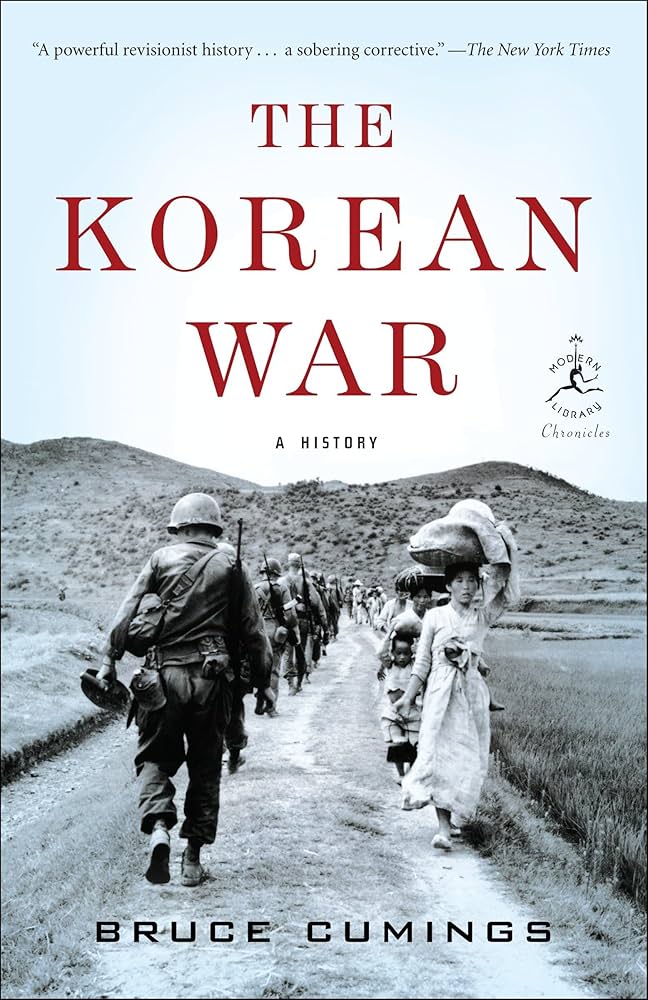
For Americans, it was a discrete conflict lasting from 1950 to 1953. But for the Asian world the Korean War was a generations-long struggle that still haunts contemporary events. With access to new evidence and secret materials from both here and abroad, including an archive of captured North Korean documents, Bruce Cumings reveals the war as it was actually fought. He describes its origin as a civil war, preordained long before the first shots were fired in June 1950 by lingering fury over Japan’s occupation of Korea from 1910 to 1945. Cumings then shares the neglected history of America’s post–World War II occupation of Korea, reveals untold stories of bloody insurgencies and rebellions, and tells of the United States officially entering the action on the side of the South, exposing as never before the appalling massacres and atrocities committed on all sides.
Elegantly written and blisteringly honest, The Korean War is, like the war it illuminates, brief, devastating, and essential.
DOWNLOAD
WHY THE SOUTH LOST THE CIVIL WAR
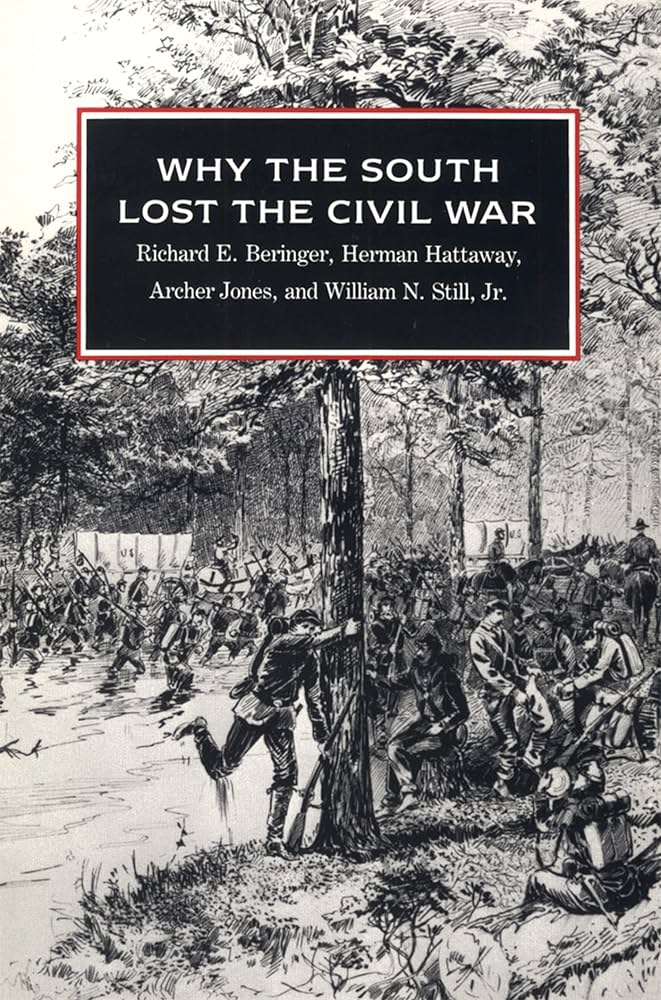
Why the South Lost the Civil War is a 1986 non-fiction book by Richard E. Beringer, Herman Hattaway, Archer Jones, and William L. Still, published by the University of Georgia Press.
It described what the authors say are the reasons why the Confederate States of America collapsed during the American Civil War. The authors argue that the kind of nationalism used in the CSA was the primary culprit.[1]
Herbert Mitgang, in The New York Times, stated that the title suggested that the states rights argument is invalid, and that attitudes were changing towards the Confederacy in Southern academia.[2]
DOWNLOAD
THE AMERICAN HERITAGE PICTURE HISTORY OF THE CIVIL WAR
A comprehensive examination of the military and political aspects of America’s Civil War
DOWNLOAD
THE CENTENNIAL HISTORY OF THE AMERICAN CIVIL WAR VOLUME I THE COMING FURY
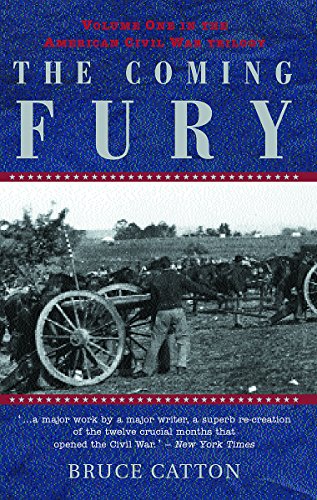
The Centennial of the Civil War was memorialized from 1961 to 1965. Publication of Bruce Catton’s trilogy highlighted this era. Unlike his previous trilogy, these books focused not only on military topics, but on social, economic & political topics as well.
The Coming Fury (1961)—Explores the causes & events leading to the start of the war, culminating in its 1st major combat, the 1st Battle of Bull Run.
Terrible Swift Sword (1963)—Both sides mobilize for a massive war effort & the story continues thru 1862, ending with the Battle of Fredericksburg.
Never Call Retreat (1965)—The war continues thru Vicksburg, Gettysburg & the bloody struggles of 1864-65 before the final surrender.
DOWNLOAD
THE CENTENNIAL HISTORY OF THE AMERICAN CIVIL WAR VOLUME II: TERRIBLE SWIFT SWORD
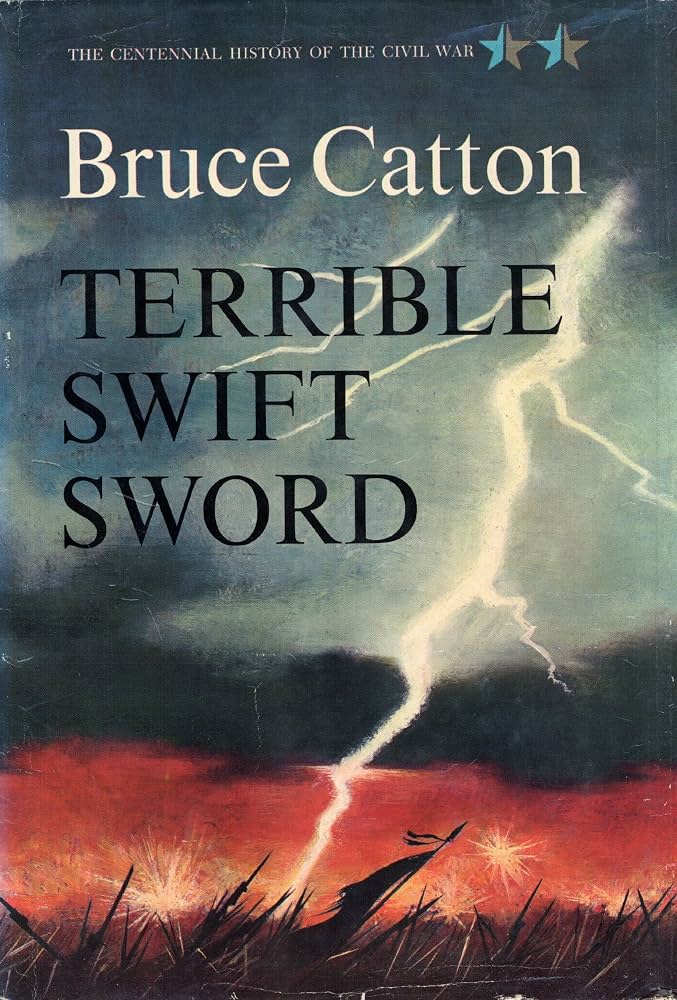
The Centennial of the Civil War was memorialized from 1961 to 1965. Publication of Bruce Catton’s trilogy highlighted this era. Unlike his previous trilogy, these books focused not only on military topics, but on social, economic & political topics as well.
The Coming Fury (1961)—Explores the causes & events leading to the start of the war, culminating in its 1st major combat, the 1st Battle of Bull Run.
Terrible Swift Sword (1963)—Both sides mobilize for a massive war effort & the story continues thru 1862, ending with the Battle of Fredericksburg.
Never Call Retreat (1965)—The war continues thru Vicksburg, Gettysburg & the bloody struggles of 1864-65 before the final surrender.
DOWNLOAD
THE CENTENNIAL HISTORY OF THE AMERICAN CIVIL WAR VOLUME III: NEVER CALL RETREAT
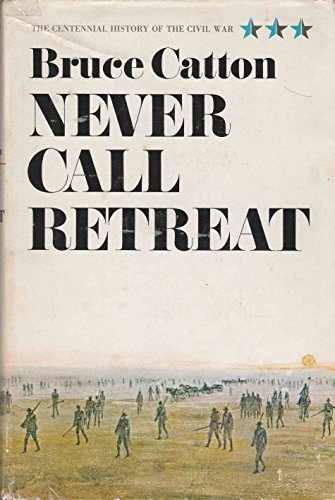
The Centennial of the Civil War was memorialized from 1961 to 1965. Publication of Bruce Catton’s trilogy highlighted this era. Unlike his previous trilogy, these books focused not only on military topics, but on social, economic & political topics as well.
The Coming Fury (1961)—Explores the causes & events leading to the start of the war, culminating in its 1st major combat, the 1st Battle of Bull Run.
Terrible Swift Sword (1963)—Both sides mobilize for a massive war effort & the story continues thru 1862, ending with the Battle of Fredericksburg.
Never Call Retreat (1965)—The war continues thru Vicksburg, Gettysburg & the bloody struggles of 1864-65 before the final surrender.