AUSCHWITZ & THE HOLOCAUST

Few can deny that the holocaust was a shameful event in history. Countless books have been written on the subject. Movies have documented and memorialized some of the best people in the worst moments of WWII and the eradication of millions of people.
What they don’t tell us about is the view from the perpetrators. Until now. This book is not meant to glorify those that committed these acts but to simply tell history from their side of the story. The events in this book aren’t glamorous. There is no flag waiving for Hitler, just the facts from a different angle.
Learn more about why the German people were so quick to jump on the bandwagon. Why were so many good people willing to believe the worst about their fellow man?
Find out what the turning point was that turned an idea into a law. What started out as a sentiment turned into a legal right of the people. If it’s a law than it must be ok. Right? Find out what happened to make many people believe that.
Read more about the other groups persecuted by the Nazi’s. We typically are familiar with the atrocities committed against the Jewish people and POWs but there is little said about the other groups that were targeted. Hat other groups did Hitler want to eradicate?
This book takes a rare look at what turns the average citizen into a racist killer. History needs to be told from all sides. Read more about this side and grab your copy of this book today. Comments From Other Readers
“It’s hard to read about things like this. We’d like to believe that these people are born killers, that they were all mad. That’s hardly the truth though. Some were forced into it while others were glad for the cause. This book brings that to light. Well written and easily digestible, this book is ideal for the young scholar or for those that are unfamiliar with this portion of history. I found it intriguing and saddening but well worth the read” – Greg (Manchester, UK).
“My grandfather fought in WWII. He spoke little about it before he passed away so I read what I can find. I’ll admit that I don’t always have the time to dive into large books. This book was perfect. There’s a saying that history is told by the victor. There’s truth to that. We’re often afraid to look at the losers side but in this case I think it needs to happen. It was difficult to read about these things but it needs to be told.” – Sophie (Utah, US)
DOWNLOAD
HITLER’S WILLING EXECUTIONERS: ORDINARY GERMANS AND THE HOLOCAUST
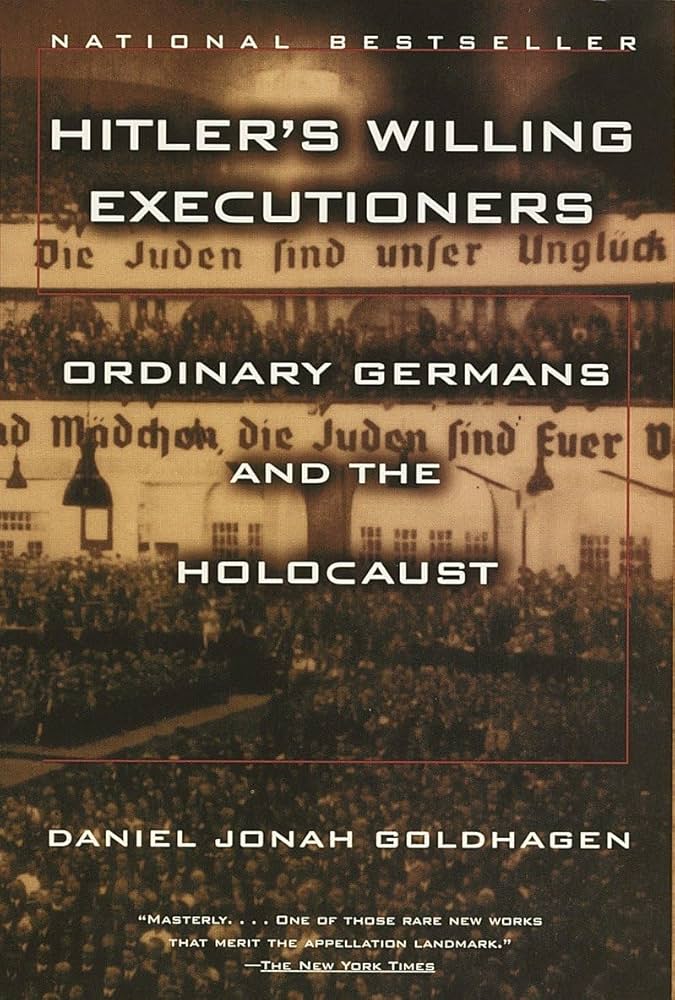
This groundbreaking international bestseller lays to rest many myths about the Holocaust: that Germans were ignorant of the mass destruction of Jews, that the killers were all SS men, and that those who slaughtered Jews did so reluctantly. Hitler’s Willing Executioners provides conclusive evidence that the extermination of European Jewry engaged the energies and enthusiasm of tens of thousands of ordinary Germans. Goldhagen reconstructs the climate of “eliminationist anti-Semitism” that made Hitler’s pursuit of his genocidal goals possible and the radical persecution of the Jews during the 1930s popular. Drawing on a wealth of unused archival materials, principally the testimony of the killers themselves, Goldhagen takes us into the killing fields where Germans voluntarily hunted Jews like animals, tortured them wantonly, and then posed cheerfully for snapshots with their victims. From mobile killing units, to the camps, to the death marches, Goldhagen shows how ordinary Germans, nurtured in a society where Jews were seen as unalterable evil and dangerous, willingly followed their beliefs to their logical conclusion.
“Hitler’s Willing Executioner’s is an original, indeed brilliant contribution to the…literature on the Holocaust.”–New York Review of Books
“The most important book ever published about the Holocaust…Eloquently written, meticulously documented, impassioned…A model of moral and scholarly integrity.”–Philadelphia Inquirer
DOWNLOAD
DACHAU
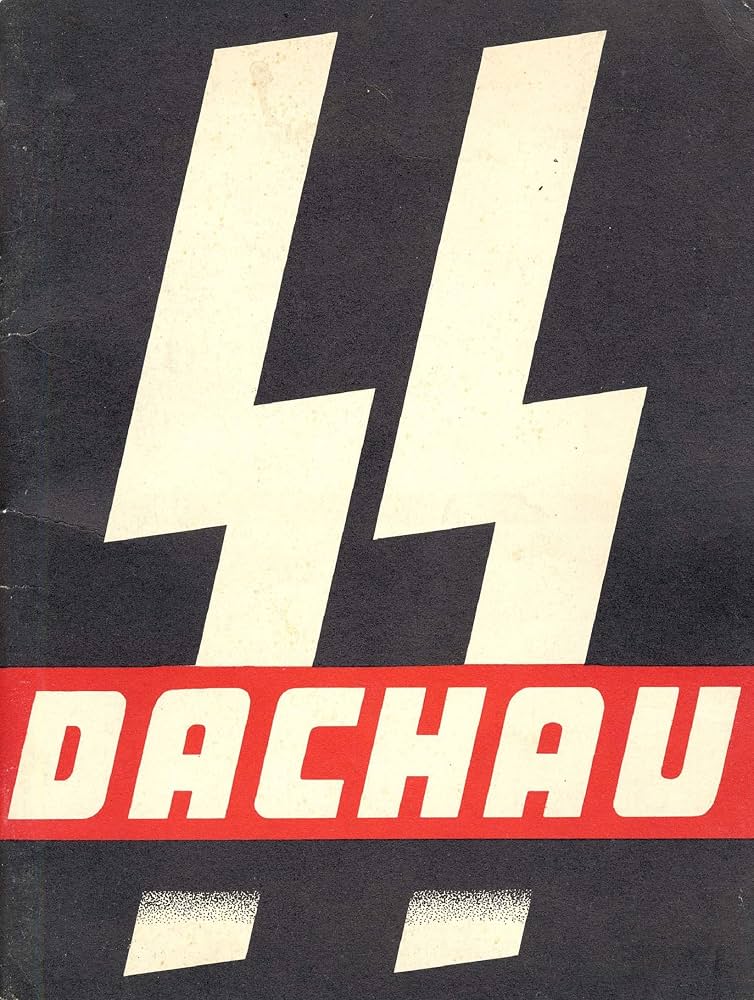
Written by the staff of the U.S. 7th Army soon after its liberation, this report stands as evidence of some of the worst crimes of the Holocaust. The images contained within also document the inhuman suffering inflicted at Dachau.
“DACHAU, 1933-1945, will stand for all time as one of history’s most gruesome symbols of inhumanity. There our troops found sights, sounds and stenches horrible beyond belief, cruelties so enormous as to be incomprehensible to the normal mind. DACHAU and death were synonymous.
No words or pictures can carry the full impact of these unbelievable scenes but this report presents some of the outstanding facts and photographs in order to emphasize the type of crime which elements of the SS committed thousands of times a day, to remind us of the ghastly capabilities of certain classes of men, to strengthen our determination that they and their works shall vanish from the earth.
The sections comprising this report were prepared by the agencies indicated. They remain substantially as they were originally submitted in the belief that to consolidate this material in a single literary style would seriously weaken its realism.”-Foreword.
DOWNLOAD
DACHAU CONCENTRATION CAMP
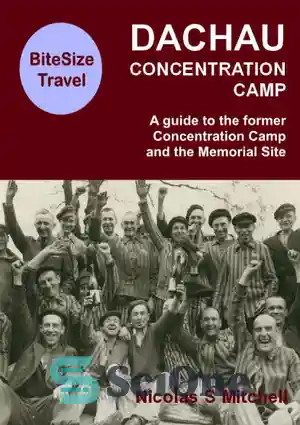
This bitesize ebook fulfills two functions. Firstly, it acts as a guide to some of the important aspects of the infamous Dachau Concentration Camp and, secondly, it highlights and explains the significance of the main memorials that now stand on the grounds of the former concentration camp. Hundreds of thousands of people from all continents visit Dachau Memorial Site each year. Any visitor to the Memorial Site will find “Dachau Concentration Camp – A Guide to the former Concentration Camp and the Memorial Site” a useful aid when planning or making their visit. There is little, recently written and reasonably priced literature which deals in a clear and concise manner with key themes. The ebook has been published in response to questions that were often raised when the author conducted the “open tour” of the Memorial Site. Visitors were keen to understand who was imprisoned and why, they were curious to know how prisoners arrived and the procedure of being processed into “protective custody” at the concentration camp. Furthermore, they wanted to know the significance of the religious and non-denominational memorials and the importance of Baracke X. “Dachau Concentration Camp – A Guide to the former Concentration Camp and the Memorial Site” addresses these themes. As well as being an aid when visiting the Memorial Site, it can also be read independently either to complement existing literature or simply to give a good overview of the Dachau Concentration Camp. It is written in an accessible style with accounts of former prisoners used to illustrate the conditions which existed within the concentration camp. It also includes over 40 contemporary and historic photographs as well as a bibliography for further reading. [approximately 15,250 words, 42 photographs]
DOWNLOAD
THE BUCHENWALD REPORT
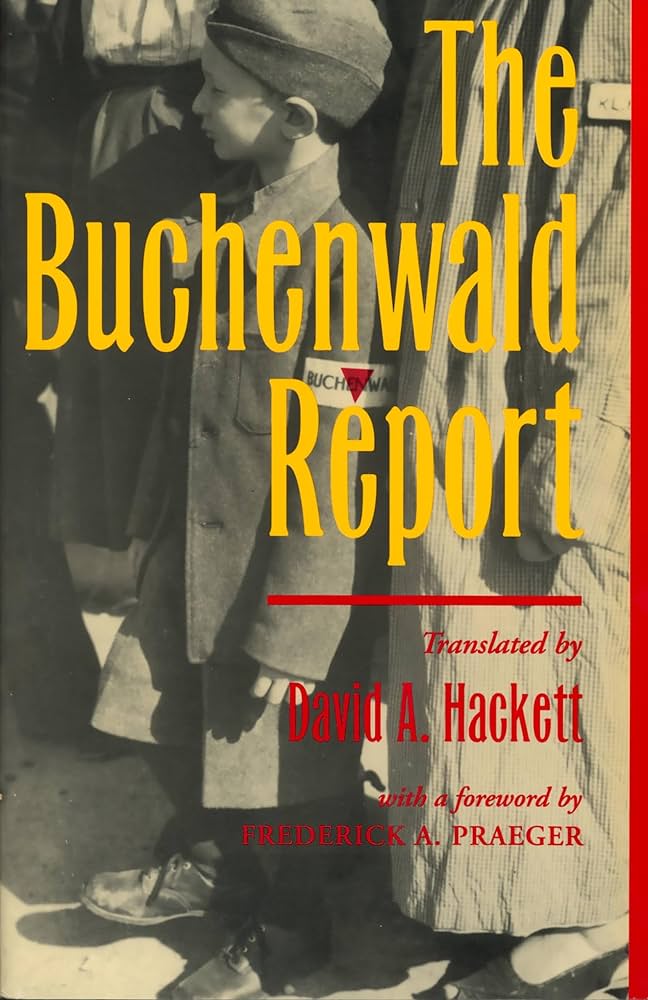
In the closing weeks of World War II, advancing Allied armies uncovered the horror of the Nazi concentration camps. The first camp to be liberated in western Germany was Buchenwald, on April 11, 1945. Within days, a special team of German-speaking intelligence officers from the U.S. Army was dispatched to Buchenwald to interview the prisoners there. In the short time available to them before the inmates’ final release from the camp, this team was to prepare a report to be used against the Nazis in future war crimes trials. Nowhere else was such a systematic effort made to talk with prisoners and record their firsthand knowledge of the daily life, structure, and functioning of a concentration camp. The result was an important and unique document, The Buchenwald Report.Shockingly, not long after the war ended The Buchenwald Report was almost lost forever. Only selected portions were entered as evidence at the Nuremberg trials. Professor Eugen Kogon, a prisoner at Buchenwald who assisted the Army specialists in conducting their interviews and writing the report, made use of the material gathered as a background source for his classic book, The Theory and Practice of Hell, but subsequently his copy was accidently destroyed. Thus the complete report was never published, and both the original document and a precious handful of copies gradually disappeared. Recently-more than four decades later-a single, faded carbon copy was discovered, apparently the only one still in existence. It is translated from German and presented here in book form, as its authors intended, for the first time.The book is divided into two parts. The first, the Main Report, formally presents the interview team’s findings. It describes in detail the camp’s history, how it was organized and functioned, who the prisoners were, how they lived, and how they were treated by their Nazi captors. This part of the report is based on the camp’s own incriminating files and records as well as on information obtained from the prisoners.The second part, the Individual Reports, is the heart of the book. Here are the eyewitness accounts of the camp inmates, statements taken while they were still behind the same barbed wire that had held them for so many years. The prisoners relate events so recent, so painful, that they can only speak with strong emotions but often with great eloquence. The interview team had the foresight to take these accounts and organize them according to specific topics, for example forced labor, daily camp life, punishments, resistance, or SS guards. As a result, the book goes beyond simply a collection of individual stories, providing instead a well-rounded portrayal of every aspect of Buchenwald concentration camp from the prisoners’ point of view.The Buchenwald Report is one of the most remarkable and important documents to emerge from the Holocaust and World War II. It is a deposition against the monstrous crimes of the Nazis, damning testimony provided by their intended victims in a final act of defiance. These are the voices of people courageous enough to tarry a while longer in hell, so that they could tell the world the truth at last. Perhaps they already sensed that, as Milan Kundera was to put it, “the struggle of man against power is the struggle of memory against forgetting.” After fifty years, and too many lapses of memory, we know they were right.